Heritage. Is it the forgotten central reason to reject the two Development Applicationss for plastic fields at Callan Park? I was reminded of this when letter-boxing and a local said to me, “No plastic grass at Callan Park – surely it’s self-evident”. Well it should be. Trouble is that the plastic advocates mistake Callan Park as some kind of greenfields site or a blank canvas. It’s not. It’s a priceless heritage site – for both First Nations and settler colonial history.
It’s worth taking a look at the actual citation in the State Heritage Register for Callan Park. This citation spells out the reasons for the listing – and we’ve reprinted it at the end of this intro.
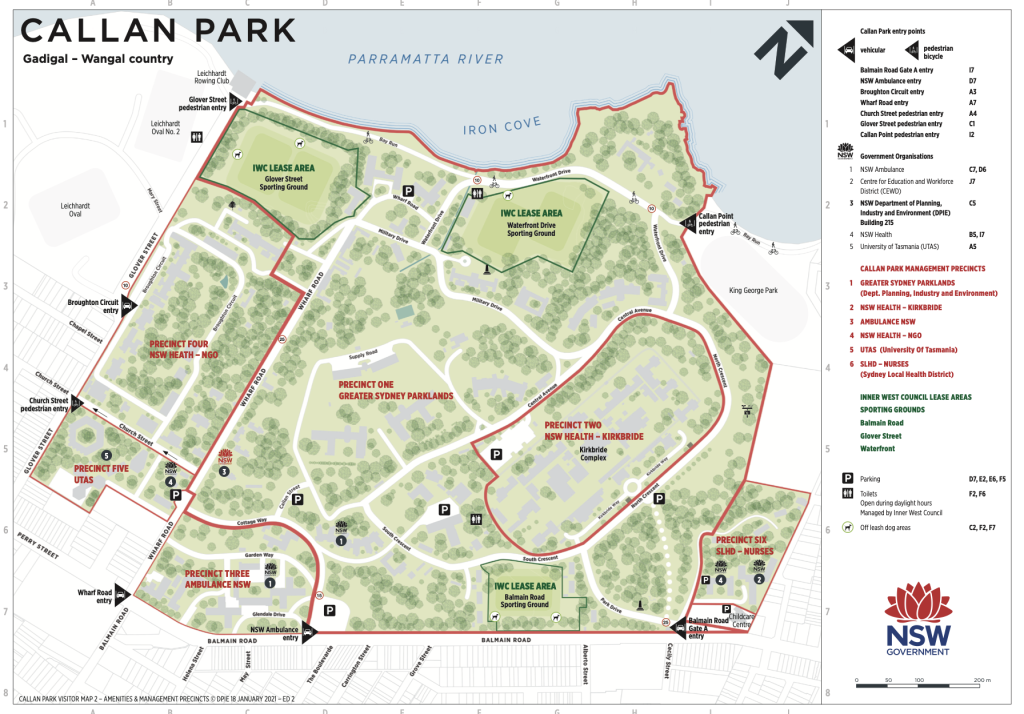
Both the current Development Applications for plastic grass fields (see map at the end of the hole post for location of the Waterfront Drive and Balmain Road ovals) violate and undermine the essential features of Callan Park that have led to it being included on the State Heritage Register
Callan Park is listed for both its buildings and its landscape. What distinguishes the landscape is that it combines traces of First Nations occupation, as well as the boundaries of 19th century private and public estates. It is an extraordinarily unique site in that respect. The citation notes that in numerous places – see paragraphs 3, 4, 5, 6, 8, 9.
The citation also details the special features of the landscape that reinforce its inclusion. It notes its ‘pastoral character’, the fact that it is an ‘intact’ 19th century estate, the retention of its ‘original character, fabric and setting’, its ‘accomplished design’, and its ‘naturalness’.
The installation of plastic fields would clearly violate and undermine each of these essential features of Callan Park. It would be, as another local said, an act of vandalism.
The violations of these essential features do not exhaust the heritage reasons for rejecting the DAs. The peoposed fields also run counter to many policies in the Conservation Management Plan 2011 – and these will be detailed in the Friends’ submissions.
It is also relevant here that the conversion of both these fields into plastic football/soccer fields, ringed by a raised concrete kerb, will bar their use by cricketers. That use is truly historic and a key part of the heritage of Callan Park – the first recorded cricket game was played on the Balmain Road field in 1879. Donald Bradman played a charity game there in 1932, scoring 134 runs and – according to urban legend – he was bowled out by a patient of the asylum.
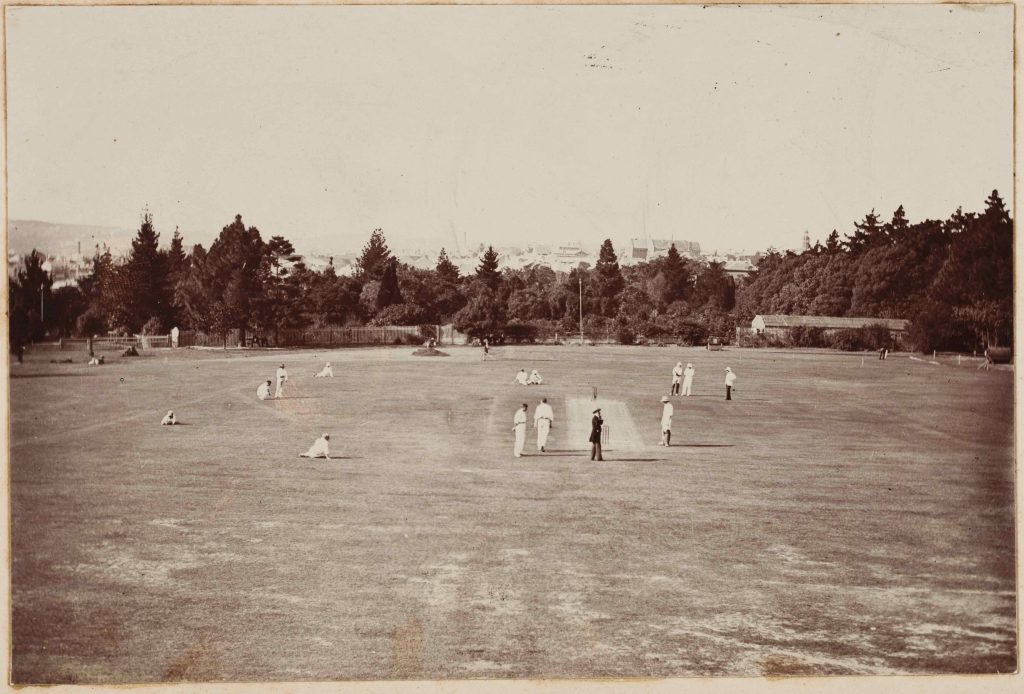
There’s more to the heritage case, but this will do for the time being.
Except for one final rebuttal. A senior oficial of the Balmain football club that plays on Waterfront Drive oval has claimed that all this heritage policy doesn’t apply to the field they want on the foreshore because it’s on reclaimed land. Well, a Friend has looked at the 19th century maps and 70% of the proposed plastic field is on land that is not reclaimed. The map is here – with the yellow line indicating the original shore line … 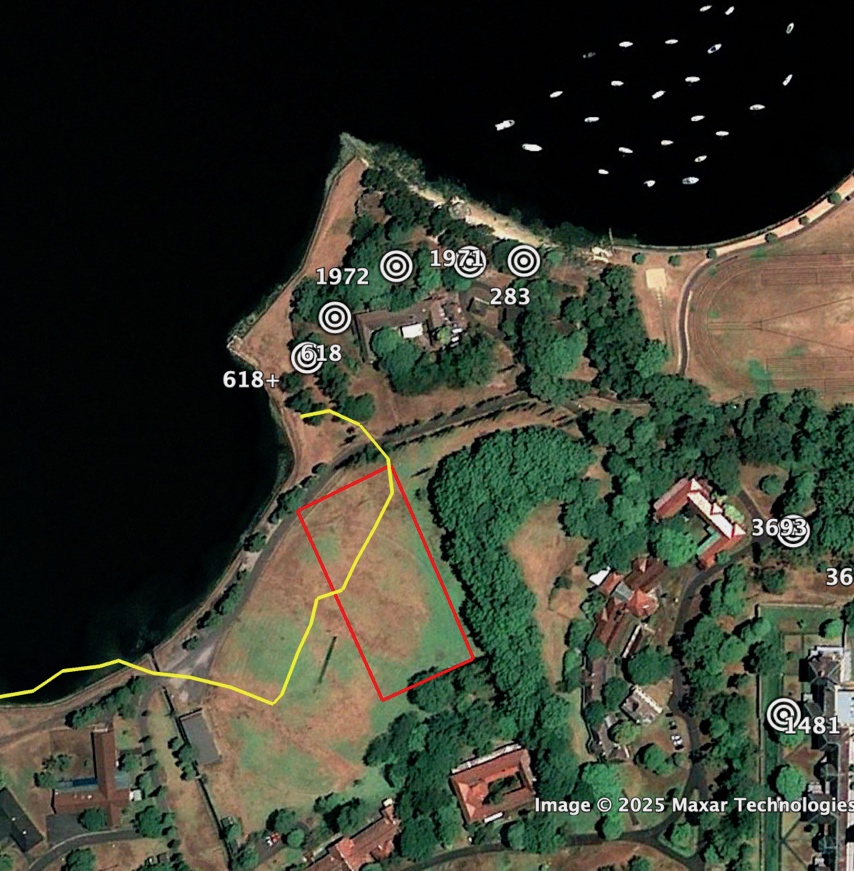
Callan Park : Statement Of Significance
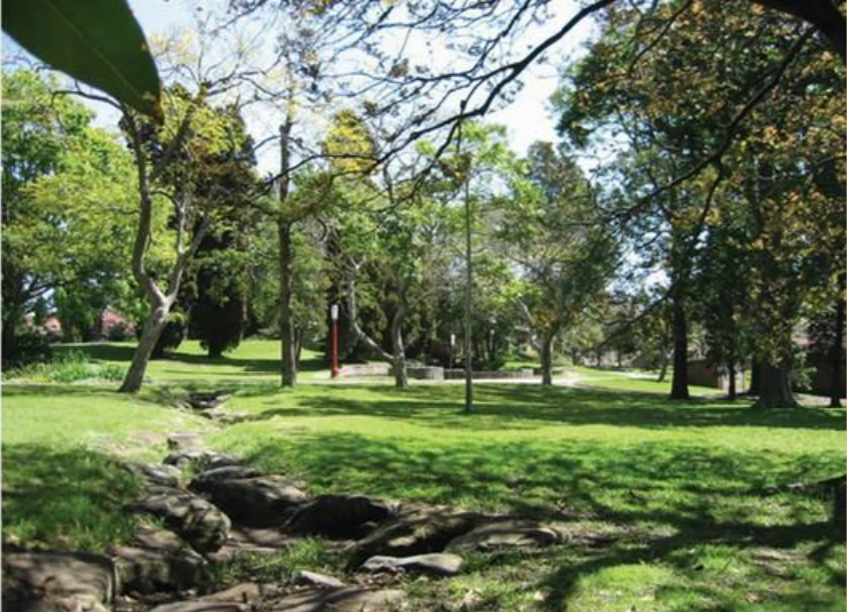
Rozelle Hospital site, created as one unit in 1976, comprises two major mental health facilities, each of which was developed using an existing mansion house set within expansive landscaping. As a whole, and as two component parts, Rozelle Hospital can demonstrate it has heritage significance to the people of NSW.
The Rozelle Hospital site contains the fabric of two grand Victorian gentlemen’s estates, and is able to demonstrate the pastoral character of the period. The original relationship between Callan Park Conservation Area and Buildings’ Garry Owen House (later Callan Park) and Broughton Hall has been retained and their grounds are still interpretable and intact. These grounds became the sites of the mental health institutions that adopted their respective names.
Rozelle Hospital demonstrates two major changes in mental health in NSW. It contains original architecture and landscaping of both hospitals. The buildings associated with the former Callan Park mental hospital are of exceptional significance, in particular the Kirkbride Block.
Its landscaped spaces and landmark buildings have contributed visually and socially to the local area for over 100 years. The foreshore areas of the site are significant as rare open space elements. Callan Point is considered to be the most important Aboriginal archaeological site remaining on the southern shores of Sydney Harbour. Callan Point also contains rare examples of pre-European vegetation and unique European rock carvings.
The site as a whole has very high levels of social significance and has special associations for the local and broader community both as an open space resource and for its cultural and aesthetic value.
Kirkbride Block is significant as the collaborative work of three prominent figures in the late 19th century, James Barnet, Charles Moore and Frederick Norton Manning, as the largest remaining mental institution in NSW and as the first to be designed as a curative and therapeutic environment. The landscape design and setting of Kirkbride is vital and paramount to the design and philosophy of ‘moral therapy’ treatment evidenced in the intimate design of courtyards through to the long vistas over the hospital grounds and surrounding country.
The landscape cannot be separated from the buildings and performs an equal and active function in the creation of the therapeutic environment. It is highly significant that much of the original fabric, character and setting for this major Victorian period design remain intact within a highly developed inner city locality.
Callan Park House (former Garry Owen House), as an impressive early and mid-Victorian residence is one of the oldest remaining houses in the district. It has strong associations with the early history of the Rozelle area. It is an important visual landmark element within the hospital. (State Heritage Inventory)
Rozelle Hospital grounds are of historic and social significance at a state level in their association with the establishment of two hospitals, Callan Park and Broughton Hall, demonstrating two major changes in mental health in NSW. These changes, and changing ideas in garden design, are reflected in the grounds. The grounds are of historic and social significance in their evidence of patient involvement.
The grounds of the former Callan Park area of Rozelle Hospital are of historic significance on a national level as an integral element of the first hospital for the insane which was designed based on moral therapy principles and built in the one campaign. They are a direct application of the moral therapy principles of psychiatric care in the landscape. They are associated with: Dr Frederick Norton Manning, Inspector General for the Insane; James Barnet, Colonial Architect; and Charles Moore, Director of the then Botanic Gardens, Sydney. (now the Royal Botanic Gardens, Sydney) (Read, S., pers.comm., 2004)
Broughton Hall Psychiatric Clinic gardens are of historic significance on a regional level in their demonstration of the views of Dr Sydney Evan Jones on the value of gardens in the care of the mentally ill. The form and character of the original garden setting for Broughton Hall, noted in its time, is still evident.
Rozelle Hospital is of historic significance on a regional level in that it contains rare surviving 19th century gentlemen’s estates, associated with the development of the area. Garryowen House and surrounds demonstrate, in part, the pastoral character of the estate period.
Rozelle Hospital grounds are of aesthetic significance on a regional level in that they demonstrate a high level of creative achievement. The former Callan Park Mental Hospital is an accomplished work of architecture and landscape design. Broughton Hall grounds exhibit a combination of structures of oriental inspiration with horticultural richness, and some rare plant species such as rose apple, durobby or watermelon tree, Syzygium moorei.
Rozelle Hospital grounds are of aesthetic significance in that they reflect the natural landform which was the setting for the original development of the site and surrounding suburbs and contain rare examples on a local level of remnant natural areas and Aboriginal cultural sites. It is of both aesthetic and social significance because it contributes visually and socially to the local identity and sense of place.
Rozelle Hospital grounds are of social significance on a regional level in that they provide public recreational and open space within an intensively developed urban environment.
Rozelle Hospital grounds are of scientific significance on a regional level for their horticultural significance. They are of scientific significance for their archaeological value of their rock engravings and Aboriginal middens.